
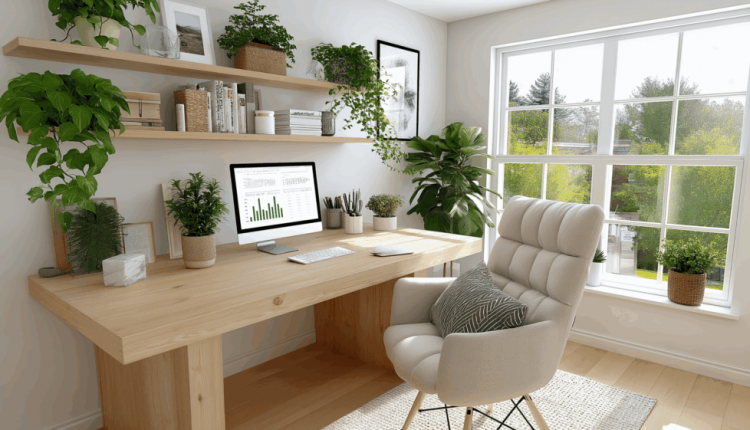
Curating the Comfortable Modern Home Office Workspace for Freelancing and Student Needs
By 2026, the “temporary” home office has officially become a relic of the past. We’ve moved beyond the era of hunched shoulders over kitchen islands and the “laptop on a pile of books” phase. Today, the home workspace is recognized for what it truly is: a high-stakes command center where professional longevity is determined by the quality of your infrastructure.
If you’ve noticed a persistent tightness in your neck by 3:00 PM or a dull ache in your lower back that persists long after you’ve logged off, you’re dealing with the “Invisible Injury”—the cumulative musculoskeletal strain caused by a workspace that doesn’t respect your biology. As we navigate the complexities of hybrid work, the goal is no longer just “comfort”; it is physiological engineering.
This guide is designed to help you transition from a makeshift setup to a high-performance sanctuary. We’ll break down the three pillars of the modern workspace: the precision-engineered ergonomic chair, the metabolic benefits of the standing desk, and how to navigate the market to find a cheap ergonomic chair that doesn’t compromise your spinal health.
The Biomechanics of the Modern Professional
To build a workspace that works, you have to understand the biological machine it’s meant to support. Evolutionarily, humans are built for movement. However, the digital economy demands that we remain static for upwards of eight to ten hours a day. When we sit in a non-optimized environment, our bodies naturally gravitate toward the “C-slump”—a posture where the shoulders round, the chin tucks forward, and the natural S-curve of the spine collapses.
This “C-slump” places roughly 300% more pressure on your intervertebral discs than standing. Over months and years, this leads to restricted blood flow, reduced oxygenation to the brain (hello, brain fog!), and chronic pain. The solution isn’t just “sitting up straight”—which is impossible to maintain via willpower alone—but using furniture that facilitates a neutral posture.
The Golden Rule of Ergonomics: Don’t force your body to adapt to the furniture; choose furniture that adapts to your body.
The Foundation: Investing in the Professional Ergonomic Chair
Your chair is the most intimate interface you have with your work. If you work 40 hours a week, you are spending over 2,000 hours a year in that seat. In 2026, a high-quality ergonomic chair is no longer a luxury; it is a critical piece of health equipment.
The Mechanics of Lumbar Support
A professional-grade chair focuses on the lumbar region (the small of your back). Look for “dynamic” support—a system that moves with you. When you lean forward to type or recline to take a call, the chair should maintain constant tension against your lower spine. This prevents the muscles from fatiguing and protects the integrity of your spinal discs.
Material Performance: The Mesh Revolution
In many domestic environments, thermal regulation is a major issue. Heavy leather or thick foam chairs trap body heat, leading to restlessness and “micro-fidgeting.” High-tensile mesh has become the gold standard because it allows for passive cooling. By keeping your core temperature stable, you reduce physical irritability and maintain higher levels of cognitive focus.
4D Adjustability
If your chair doesn’t have adjustable armrests, your shoulders are paying the price. “4D” armrests—which move up/down, left/right, front/back, and pivot—ensure that your elbows are supported at a perfect 90-degree angle. This removes the weight of your arms from your neck and trapezius muscles, which is the primary cause of tension headaches.
Ergonomics on a Budget: Finding Value Without the Pain
Let’s be real: not everyone wants to drop four figures on a “designer” seat. The good news is that the “trickle-down” of ergonomic technology has been massive. You can now find a cheap ergonomic chair that outperforms expensive executive chairs from a decade ago.
What to Look For in a Budget Option
When shopping for a cost-effective solution, you must prioritize function over fluff. Avoid chairs that use “extra padding” as a selling point; thick foam often masks a lack of structural support. Instead, look for:
- Breathable Mesh Backs:Provides better support and cooling than cheap synthetic leather.
- Synchronized Tilt:This ensures that as you recline, the seat and backrest move in a specific ratio (usually 2:1), keeping your feet flat on the floor.
- Class 4 Gas Lifts:This is the internal component that handles height adjustment. A Class 4 lift ensures the chair remains stable and doesn’t “sink” over time.
By focusing on these core mechanical features, you can protect your spine without overextending your bank account.
The Movement Revolution: The Role of the Standing Desk
The biggest leap in office wellness over the last few years has been the widespread adoption of the standing desk. However, many people use them incorrectly. The goal isn’t to stand all day (which can lead to foot fatigue and varicose veins); the goal is intermittent movement.
The Metabolic Reset
Standing for just 15 minutes every hour engages your core, stretches your hip flexors, and provides a “metabolic reset.” It clears the mental congestion that sets in after lunch and serves as a natural energy booster.
Technical Specifications to Consider
- Dual-Motor Systems:These provide a smoother, quieter transition than single-motor versions. If your desk is loud or “jerky,” you’ll be less likely to use the standing feature.
- Memory Presets:This is a non-negotiable for 2026. You should be able to hit a button and have the desk move to your mathematically perfect sitting and standing heights. Removing the friction of manual adjustment is the key to building the habit of movement.
- Anti-Collision Technology:Essential for home environments where a desk might lower onto a chair arm or a curious pet.
Environmental Hygiene: Beyond the Furniture
A high-performance office is more than just a desk and a chair; it’s an ecosystem. To maintain “Flow State,” you need to address the environmental factors that drain your cognitive bandwidth.
Lighting and Circadian Rhythm
Visual clutter and poor lighting are documented drains on focus. Position your desk perpendicular to a window to get natural light without the glare on your screen. In the evenings, use “warm” biased task lighting to signal to your brain that the workday is ending, helping you maintain a healthy sleep-wake cycle.
Acoustic Softening
Home environments are often full of “hard” surfaces—drywall, glass, and wood floors. This creates an echo that is exhausting for the brain to process during video calls. You can “soften” your space with rugs, curtains, or even a few large-leaf plants (like a Monstera or Snake Plant), which also improve air quality.
Cable Management: The Mental Relief
“Cable spaghetti” is a source of low-level visual anxiety. Spend 20 minutes with some velcro ties or a cable tray. A clean floor and a clean desk surface allow your eyes to rest, reducing the mental “noise” you have to process while working.
The Psychology of the “Fake Commute”
One of the hidden benefits of a traditional office was the commute—it provided a psychological buffer between “Home Mode” and “Work Mode.” When you work from home, that line blurs, leading to burnout.
Actionable Rituals:
- The Shutdown Ritual:At the end of the day, clear your desk, push your chair in, and physically leave the room.
- The Digital Boundary:Use your standing desk to help. Many pros lower their desk to its “seated” height at the end of the day as a visual cue that the “active” work time is over.
- The 20-20-20 Rule:Every 20 minutes, look at something 20 feet away for 20 seconds. This prevents digital eye strain and the headaches that come with it.
Designing Your Future Self
In 2026, we realize that productivity isn’t about working more hours; it’s about maintaining the energy and physical health required to do your best work. Investing in a professional ergonomic chair, a versatile standing desk, or even a strategically chosen cheap ergonomic chair for a secondary space, is an act of self-care.
Your environment dictates your energy. By building a space that respects your biology, you aren’t just “buying furniture”—you are engineering a better, healthier, and more focused version of yourself.